
Some links in this article are affiliate links. Healthcare News Center may earn a commission if you buy, at no extra cost to you.
Nearly 82 million people are expected to travel for Thanksgiving, and a crowded terminal or an extra hour in traffic can turn an ordinary health routine into a scramble. In a Nov. 17 forecast release, AAA projects that 81.5 million Americans will travel at least 50 miles from home between Nov. 24 and Nov. 30. That includes 72.9 million traveling by car and 5.96 million taking domestic flights. For older adults and caregivers, the best preparation is not a bigger bag. It is knowing what has to stay within reach and what needs confirming before the trip.
Key Takeaways
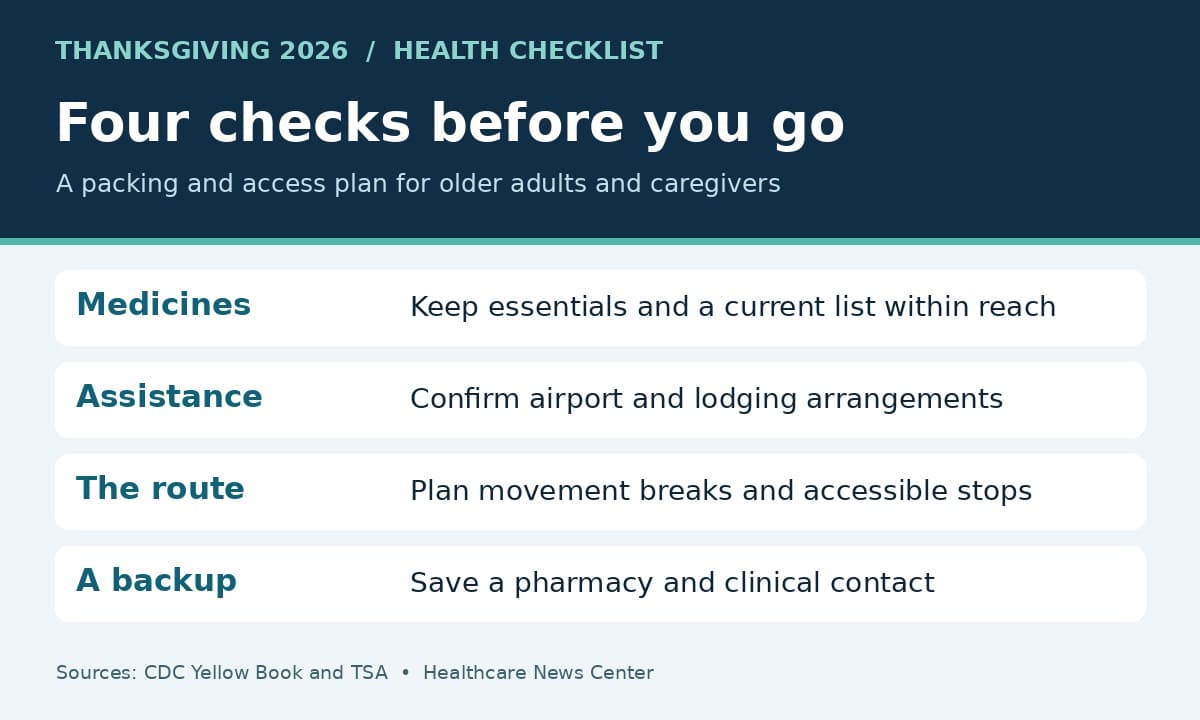
- Keep essential medicines and an up-to-date medication list accessible. Ask a pharmacist about refills, original packaging and any temperature-sensitive supplies before leaving.
- Arrange airport and lodging assistance directly, and confirm the details that matter, from a connection to a step-free bathroom.
- Plan for traffic, rest stops and an overnight delay. Put contact numbers and a small supply of essentials somewhere that both traveler and companion can find.
“Thanksgiving travel is leveling off this year, but volumes remain extremely high,” Tiffany Wright, a spokesperson for AAA — The Auto Club Group, said in the release. AAA expects a slight decline from last year, but still forecasts some of the heaviest driving congestion on Tuesday and Wednesday before Thanksgiving. Driving or flying, make a plan around the traveler’s needs rather than the shortest advertised trip time.
Which medicines should stay with you in transit?
Pack regular prescriptions and the supplies needed to use them in a bag you can get to without opening the trunk or retrieving checked luggage. The CDC Yellow Book recommends bringing enough for your trip plus several extra days in case of delays. If a refill is due while you’ll be away, contact the pharmacy now rather than counting on a holiday opening. Keep a written list of medication names and doses, allergies and prescriber phone numbers, with a backup on your phone if practical.
A labeled pill organizer can help keep familiar routines straight once you arrive, if your pharmacist says those medicines can be taken out of their packaging. Keep drugs that need special handling in their original containers. If a medicine calls for refrigeration, ask what temperature range it needs, how long it can be out, and whether direct contact with an ice pack is safe. A cooler alone does not answer those questions. For a flight, pack the essentials in the smaller bag that stays with you if your roller bag is checked at the gate.
How do you get medication and medical supplies through airport screening?
TSA lists pills as permitted in carry-on and checked bags. Keeping prescriptions in your carry-on makes them easier to reach if luggage is delayed. TSA also allows medically necessary liquids, gels and aerosols in reasonable quantities for the trip; tell the officer at the checkpoint so the items can be screened. The agency offers device- and condition-specific screening guidance. If you use a medical device that should not go through a particular type of screening, check its manufacturer’s instructions beforehand and tell the officer before screening begins.
Airport screening support and airport mobility support are different requests. Contact TSA Cares about help at the security checkpoint; contact the airline about help getting through the terminal, boarding or making a connection. When you make a request, say what assistance is needed at each airport, not just that someone can’t walk far. Save the confirmation and repeat the request at check-in if needed. A traveler changing planes can ask where the next person will meet them and what to do if that handoff doesn’t happen.
Where should you plan to stop if you’re driving?
Pick stops before you get on the road. If someone needs an accessible restroom, a level walk from a parking lot or time to move without rushing, choose more than one place that meets those needs. Check Thanksgiving hours rather than assuming a rest stop, pharmacy or restaurant will be staffed. Keep water, glasses, hearing aid batteries and any snacks needed for a person’s usual care routine within reach. A basic kit can use supplies you already have; if you do need to restock, check first-aid supplies for bandages and dressings you know how to use.
Long trips are also a reason to plan movement. The CDC’s travel guidance notes that sitting for more than four hours by car, plane, bus or train can raise the risk of blood clots. Frequent leg movement and breaks, when safe and feasible, are sensible for many travelers. If someone has had a clot, recently had surgery or cannot move around easily, ask their clinician what precautions fit them. Do not start aspirin or another medication for the trip without medical advice. Nobody should have to navigate an unsafe parking lot to meet a rigid schedule; plan the stop to suit the traveler.
What should you confirm with the hotel or host?
Ask about the actual route from the car to the bedroom. Is there a step at the front door? Is the sleeping area on a different floor? If you are reserving a room, specify which bathroom features and bed access the traveler needs rather than relying on the word “accessible.” If you’re staying in someone’s home, ask which bathroom is easiest to reach and where medicines can be stored away from children and pets. Confirm the details with the traveler, not just their companion.
If you need unfamiliar equipment, don’t assume an online purchase is the first move. HNC’s assistive technology guide explains where to ask about trying or borrowing equipment. For the trip itself, practice packing and folding the equipment you already use and label detachable parts before you leave. A short check at home is easier than trying to work it out in an airport drop-off lane.
What should you do if the trip takes a day longer?
Save the number of the home pharmacy and identify one near your destination. Keep the prescriber’s number, a list of medications and details of any medical devices somewhere you can reach even if a phone battery dies. If traveling with someone, decide who carries the backup list and who will make the call if the traveler is busy or unwell. Leave the same information with a trusted person at home only with the traveler’s permission.
The most useful test is simple: imagine arriving one night late without the larger bag. If you can still take your usual medicines, use essential equipment and reach someone who knows your care plan, you’ve packed the right things in the right place.
Frequently Asked Questions
Can you carry liquid prescription medication through TSA screening?
Yes. TSA permits larger amounts of medically necessary liquids in reasonable quantities for the trip. Tell the officer before screening and check the agency’s current guidance for your supplies.
Is asking TSA Cares the same thing as booking wheelchair assistance at the airport?
No. TSA Cares is for security screening support. Ask your airline about wheelchair or other mobility assistance through the airport, including any connection.
How many extra days of medicine should you pack?
CDC recommends bringing enough for the length of the trip plus several days in case of delay. Ask your pharmacist or prescriber in advance if there are limits, refrigeration needs or questions about the dosing schedule.
Featured media: File photo: Benjamin Applebaum / U.S. Department of Homeland Security (2021, public domain).