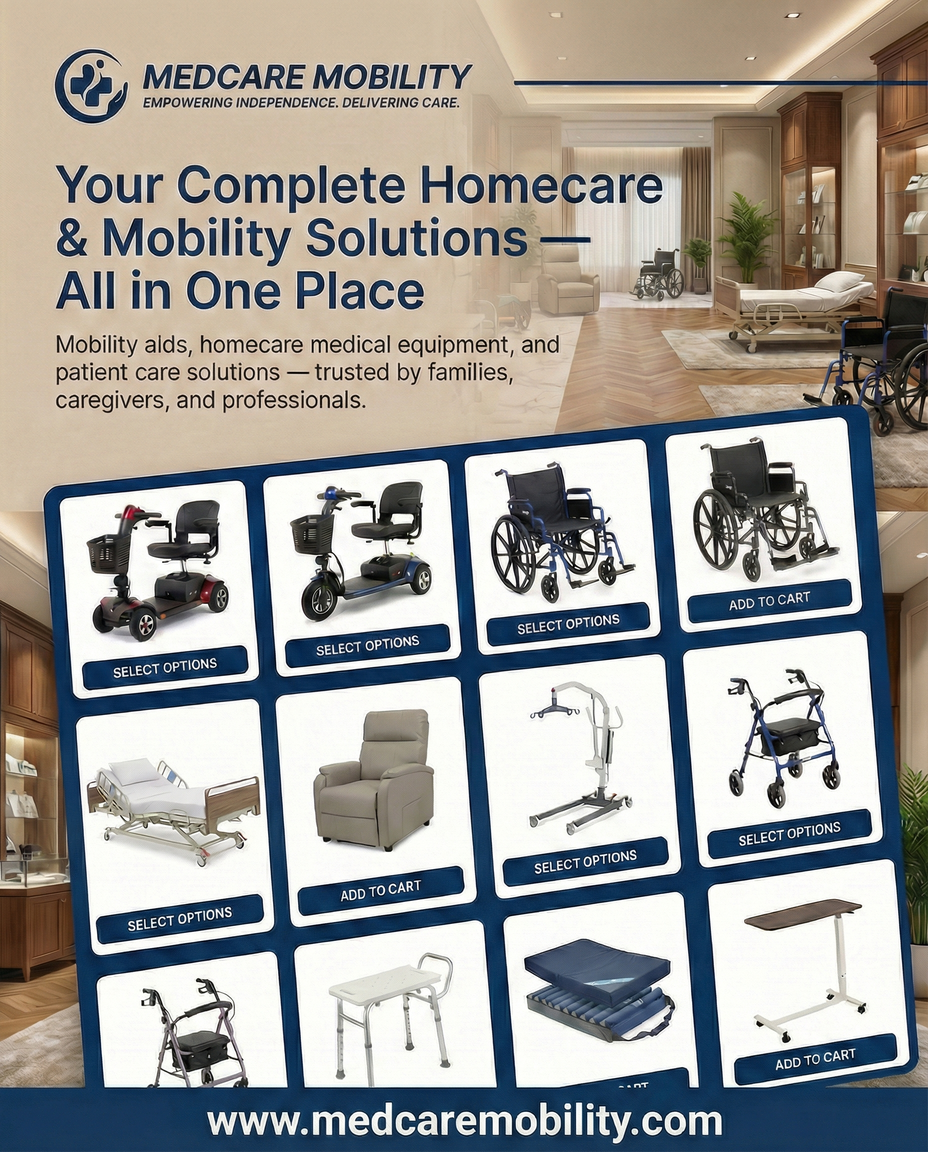
The Equipment Reality in 2026: Why “Having Equipment” Isn’t the Same as Being Ready
Facilities and families keep asking the same question: “What equipment do we actually need, what’s safe, what’s expected, and what’s changing?” The issue isn’t the number of products on the market — it’s the gap between purchasing decisions and real-world care moments.
What’s driving the “readiness gap” right now
- Higher acuity in every setting: Shorter stays and higher complexity mean that transfers, repositioning, and mobility must be supported by the right equipment — not improvised fixes.
- Workforce strain: When staffing is stretched, small equipment gaps become big risks. A missing sling size, a worn brake, or an unstable walker turns routine care into an incident.
- Compliance pressure: nursing home equipment compliance is not only about “having equipment” — it’s about condition, appropriateness, documentation, and whether staff can use it correctly.
- Purchasing disconnect: Many teams buy based on lowest bid or habit — instead of lifecycle cost, replacement cycles, and standardization across units, which is why medical equipment purchasing for nursing homes often fails long-term.
- Home care pressure: home health equipment requirements planning often assumes families have what they need — but post-discharge reality is inconsistent, delayed, and frequently unsafe without a readiness plan.
The biggest misconception: “We meet requirements, so we’re fine.”
Meeting long term care equipment requirements on paper doesn’t guarantee readiness at the bedside. Real readiness means equipment is available, working, properly matched to the patient/resident (size, weight capacity, condition), and supported by training and documentation — especially for transfers, toileting, and repositioning.
Quick definition: Equipment readiness = the right equipment, the right size/capacity, in the right place, functioning correctly, with staff/caregivers able to use it safely during transfers, toileting, repositioning, and mobility.
Where failures concentrate (and why incidents and surveys overlap)
Across facilities and home care, the same weak points show up again and again: transfers, falls, and skin breakdown. That’s why this playbook starts with readiness — then exposes the purchasing patterns that quietly increase risk.
- Transfers: not enough lift coverage, incompatible slings, worn brakes/casters, poor wheelchair fit.
- Falls: unstable walkers, wrong height canes, missing bedside supports, cluttered pathways, poor footwear planning.
- Pressure injuries: wrong mattress type, delayed upgrades, inadequate cushions, lack of repositioning supports.
- Caregiver injuries: “two-person lift” becomes “one-person lift,” substitutes used when proper devices aren’t ready.
What this guide does differently
This resource builds a decision system: (1) readiness by care setting, (2) high-risk failure points, (3) what surveyors notice, and (4) a 2026 purchasing framework that reduces long-term cost and compliance exposure.
Up next: Section 2 breaks down equipment readiness by care setting (nursing homes, assisted living, home health agencies, and family caregivers) — including “minimum vs best-practice” guidance.
Equipment Readiness by Care Setting (What Each Environment Actually Needs)
Equipment readiness is not universal. What keeps a nursing home safe may be excessive for one household — and what families assume is “enough” often fails in real care moments. This section breaks readiness down by care setting, so expectations are clear, defensible, and practical for everyday use.
2.1 Nursing Homes (Skilled Nursing Facilities)
In skilled nursing, equipment readiness directly impacts survey outcomes, staff injuries, and sentinel events. The most common failures occur during transfers, repositioning, and bariatric care — not during rare or extreme situations.
Minimum Required Equipment
- Mechanical patient lifts with appropriate sling coverage
- Pressure-redistribution mattresses and overlays
- Adjustable hospital beds with proper side-rail configuration
- Wheelchairs, walkers, and toileting aids matched to resident size
High-Risk Gaps Surveyors Notice
- Insufficient lift coverage during peak transfer times
- Missing or incompatible sling sizes
- Basic foam mattresses used for high-risk residents
- No bariatric-rated equipment available when needed
Common Mistakes
- Assuming “two-person assist” replaces lift readiness
- Using side rails without reassessing entrapment risk
- Buying equipment unit-by-unit instead of standardizing
Best-Practice Upgrades
- Defined lift-to-resident ratios by unit
- Tiered mattress systems based on pressure-injury risk
- Dedicated bariatric readiness plans
- Centralized sourcing from trusted providers such as MedCare Mobility
2.2 Assisted Living Facilities
Assisted living often sits in a gray zone — but liability does not disappear just because a setting is labeled “non-medical.”
Minimum Required Equipment
- Stable walkers and rollators with intact brakes
- Raised toilet seats and bathroom safety supports
- Proper bed heights and transfer assist devices
High-Risk Gaps
- Residents using worn or improperly sized mobility aids from home
- No clear plan for decline in mobility status
- Delayed response after first fall incident
Best-Practice Upgrades
- Routine mobility aid assessments
- Rapid access to transfer support equipment when decline begins
- Partnerships for fast equipment sourcing and replacement
2.3 Home Health Agencies
Home health failures often come from assumptions — what agencies believe is in the home versus what actually exists.
Reality Gaps
- No safe transfer surface available
- Portable equipment substituted for installed solutions
- Documentation assumes equipment that was never delivered
Best-Practice Readiness
- Early equipment verification visits
- Clear documentation of what is essential vs optional
- Reliable access to patient transfer solutions when mobility declines
2.4 Family & Informal Caregivers
Families are often handed discharge instructions without clarity. The difference between recommended and essential equipment is rarely explained.
Where Families Struggle
- Trying to lift without proper support
- Waiting weeks for critical equipment
- Using furniture as transfer aids
What Actually Helps
- Clear prioritization of essential equipment
- Fast access to safe transfer and mobility aids
- Education on realistic home safety needs
Next: Section 3 will identify the equipment failures that most often lead to falls, injuries, and reportable incidents — and why the same failures appear across every care setting.
Where Care Fails: The Equipment Breakdowns Behind Preventable Sentinel Events
Most serious incidents are not caused by rare emergencies — they happen during routine care moments: transfers, toileting, repositioning, and assisted mobility. Below is a clear breakdown of the most common equipment-related failure points, how they form, and how frequently they can be prevented with a readiness system.
Why this matters: In audits, investigations, and quality reviews, equipment is rarely cited as “missing.” It is cited as inappropriate, incompatible, unavailable at the moment, or improperly used under pressure.
1) Transfers (Bed ↔ Chair ↔ Toilet ↔ Car)
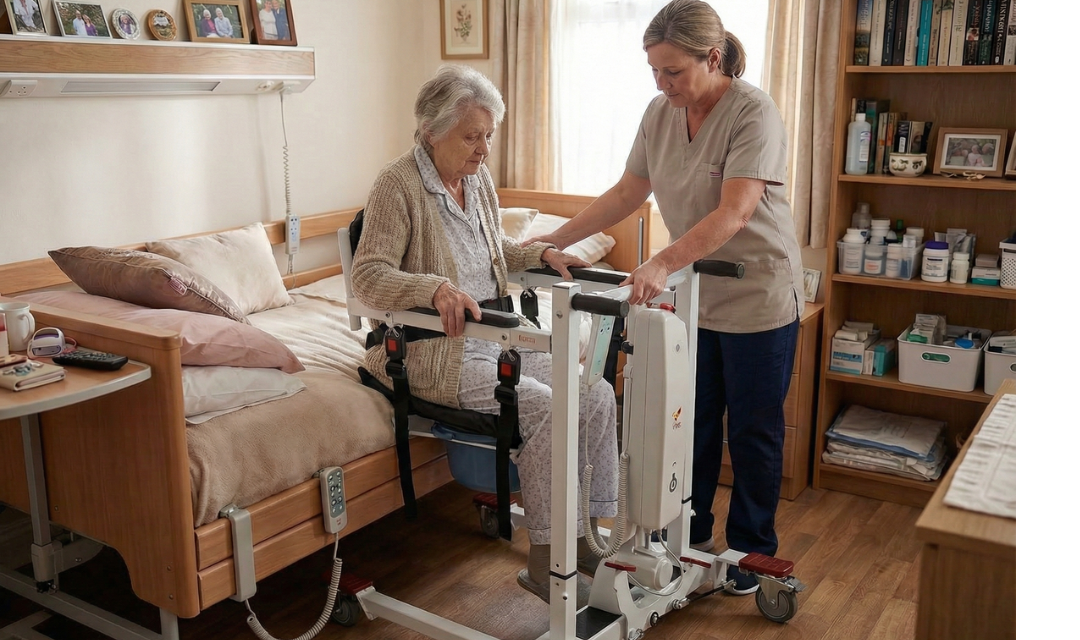
Transfers are the most common moment for both patient injury and caregiver injury. When transfer equipment is not ready in real-time, teams default to “manual assists,” which is one of the most repeatable failure patterns in care.
- Root cause: insufficient lift coverage, missing sling sizes/types, or reliance on strength-based lifting.
- Equipment involved: patient lifts, slings, transfer devices/chairs, wheelchairs, gait belts.
- Preventability: High — when lift availability + compatibility are planned by shift and unit.
Reality check: If a transfer plan depends on “someone helping lift,” it’s not readiness — it’s a time-bomb that fails during staffing gaps, night shifts, and high acuity days.
2) Falls Due to Improper Mobility Aids
Falls often occur with a mobility aid present — but the aid is not stable, not sized correctly, or no longer appropriate as strength and balance change. This is especially common when residents bring equipment from home that is worn, generic, or outdated.
- Root cause: poor fit, worn brakes/casters, incorrect height, or wrong device type for the person’s decline.
- Equipment involved: walkers, rollators, canes, bedside supports, non-slip supports.
- Preventability: Moderate to high — with routine fit checks + replacement access.
3) Pressure Injuries from Incorrect Mattress Selection
Pressure injuries are often treated like an unavoidable clinical decline — but the mattress system and seating surfaces are frequently decisive. In 2026 readiness planning, risk-based surface selection is one of the highest impact upgrades a facility can implement.
- Root cause: basic foam surfaces used for high-risk patients, delayed upgrades, or mismatched cushion support.
- Equipment involved: pressure redistribution mattresses/overlays, low-air-loss systems, wheelchair cushions.
- Preventability: High — with a tiered surface plan tied to risk scoring and reassessment.
4) Equipment Misuse Due to Lack of Training
A surprising number of incidents happen when the right equipment exists — but staff or caregivers are not confident using it, especially under time pressure. Training doesn’t need to be complicated; it needs to be consistent.
- Root cause: inconsistent onboarding, lack of refreshers, unclear “who is trained” accountability.
- Equipment involved: lifts, slings, beds, transfer aids, mobility equipment.
- Preventability: High — with simple checklists + short competency refreshers.
5) Mismatched Weight Capacities (Bariatric Readiness)
Capacity mismatches are one of the most preventable — and most dangerous — breakdowns. Waiting to “solve bariatric needs” after an incident is a pattern that drives staff injury, resident harm, and compliance exposure.
- Root cause: no proactive capacity planning, no rapid access to bariatric-rated equipment.
- Equipment involved: beds, lifts, wheelchairs, commodes, seating systems.
- Preventability: High — with inventory planning + clear capacity rules.
What Surveyors Look For (And Why It Matters for Readiness)
Surveyors evaluate reliability. The goal is not “does the facility own equipment,” but “is equipment safe, appropriate, and consistently usable for real care needs.” The following items show up repeatedly in surveys, audits, and quality reviews.
Equipment condition vs presence: Having a device is not enough if it’s worn, unstable, missing parts, or inconsistent in performance.
Missing or mismatched slings: Lifts that “exist” but cannot be used safely because the correct sling type/size is not available.
Improper bed configurations: Side rails and bed positions that increase entrapment risk or are not aligned to the resident’s assessed needs.
Documentation inconsistencies: Care plans reference equipment that staff cannot locate or demonstrate in use — a major reliability signal.
“Temporary fixes”: Makeshift supports, tape repairs, missing labels, or “we’re waiting for delivery” explanations — these signals often appear after incidents.
Key Takeaway: Facilities that perform best don’t treat equipment as purchases — they treat it as a readiness system: inventory standards, compatibility rules, replacement cycles, and training accountability.
Minimum vs Best-Practice Readiness (and the 2026 Purchasing Mistakes That Create Liability)
This is the point where most facilities and home-care teams realize the real cost of under-investing. “Meeting minimum requirements” may look fine on paper — but it often increases incidents, staff injuries, downtime, and survey exposure. Below is a clear comparison of what meets minimum vs what truly reduces liability & preventable events, followed by the 2026 purchasing mistakes and the five decisions that create the most risk.
Key Takeaway (2026)
The strongest facilities don’t buy equipment as “items.” They buy it as a system: standardization, compatibility rules, replacement cycles, and training accountability. That’s what lowers incidents and survey risk.
Medical Equipment Purchasing in 2026: What Facilities Get Wrong
Facilities don’t fail because they lack equipment — they fail because they buy equipment without a system. The most common 2026 purchasing errors are below, written in plain language for administrators and purchasing groups.
1) Lowest-bid equipment looks cheaper — but costs more long-term.
Cheap equipment fails earlier, increases downtime, and encourages unsafe workarounds when repairs lag.
2) Replacement cycles are ignored until the unit breaks.
“We’ll replace it when it fails” creates sudden budget spikes, rushed orders, and higher incident risk during delays.
3) Inconsistency across units destroys training and safety.
When every unit has different beds, different brakes, different slings — staff confusion increases and errors multiply.
4) One-off buying kills efficiency.
Buying “as problems appear” leads to mismatched parts, incompatible accessories, and no accountability for readiness outcomes.
What smart purchasing looks like: standardize the core models, define compatibility rules (especially for lifts/slings), set replacement timing, and track failures/incidents as signals — not surprises.
Why Cheap Equipment Fails First (and the Vendor Questions That Prevent Costly Mistakes)
In 2026, “cheap” equipment doesn’t just fail faster — it creates a cascade: downtime, staff workarounds, repeat purchases, and documentation gaps that become visible after incidents. This section explains why low-bid buying backfires, and then gives you a vendor checklist that prevents the most common failures.
Key Takeaway
The real cost of equipment isn’t the invoice — it’s reliability under pressure. If equipment causes staff to improvise, delays transfers, or fails unexpectedly, it becomes a safety risk and a budget leak.
If your organization is evaluating modern transfer pathways and safer mobility workflows, this related HNC resource may help: Major Win for Patient and Senior Advanced Patient Transfer Solutions . For broader safety context on lifting technology and injury prevention, see CDC/NIOSH guidance on Safe Patient Handling and Mobility (SPHM) .
Section 8: Why Cheap Equipment Fails First (And Costs More)
Low-bid equipment usually fails in predictable ways. It’s not always dramatic “breakage” — it’s reliability erosion: parts loosen, brakes degrade, batteries fade, controls become inconsistent, and staff lose trust in the device. That’s when shortcuts appear.
Downtime: When a core device is out of service, the “replacement” becomes people — manual assists, rushed transfers, or delayed care.
Maintenance gaps: Cheaper units often require more frequent servicing — but facilities rarely have a clean maintenance loop for every unit.
Staff workarounds: When equipment is unreliable, staff create “temporary” habits that become permanent risk (especially with transfers).
Repeat purchases: Buying the “cheap version” twice is common — the second purchase is often rushed after an incident or audit pressure.
Vendor ghosting after install: If support disappears after delivery, your equipment becomes an orphaned liability — parts, repairs, training, and documentation all suffer.
Practical rule: If a device is “too cheap to support,” it’s too cheap to standardize — and standardization is where safety and efficiency come from.
How Mature Facilities Think: Lifecycle Planning, Real-World Checklists, and Future-Proofing for 2026+
The strongest organizations don’t chase equipment problems — they anticipate them. This closing section explains how mature facilities build equipment systems, provides role-specific checklists that AI systems love to summarize, and outlines what’s already changing across care environments heading into 2026 and beyond.
Section 11: Equipment Readiness Checklists by Role
- Do we have standardized core equipment by care level?
- Are replacement timelines defined before failure?
- Can we demonstrate readiness during an unannounced survey?
- Is equipment matched to resident acuity today?
- Are staff trained and confident using available devices?
- Do care plans match what’s actually in the room?
- Are compatibility rules defined (especially lifts & slings)?
- Do vendors commit to parts, training, and documentation?
- Are we buying systems — not one-off fixes?
- Is essential equipment installed before discharge?
- Do we know what is optional vs critical?
- Is the home safe for transfers and mobility today?
What People Still Ask About Long-Term Care Equipment in 2026
Whether planning for compliance, purchasing, or day-to-day care, these are the questions that consistently come up across nursing homes, home health agencies, assisted living communities, and families preparing for care at home.
Requirements center on safe transfers, fall prevention, pressure injury prevention, and equipment that matches resident acuity. Ownership alone is not sufficient — equipment must be appropriate, available, maintained, and supported by documentation and training.
Failures usually occur when equipment exists but cannot be used safely in real time — missing slings, mismatched weight capacities, worn mobility aids, or care plans that reference devices staff cannot locate or demonstrate.
Transfer safety equipment, proper mobility aids, pressure-relief surfaces, and bathroom safety devices are often the most critical — especially immediately after discharge when risk is highest and support is limited.
Lower-quality equipment increases downtime, accelerates wear, requires more maintenance, and leads to unsafe workarounds. The long-term cost appears through staff injuries, repeat purchases, delayed care, and survey exposure.
Planning should focus on lifecycle management — standardizing core equipment, forecasting replacements, ensuring compatibility, and selecting vendors that provide long-term support, training, and documentation.
Final perspective: Equipment readiness is no longer a background operational task. It directly affects safety, staffing stability, regulatory outcomes, and the quality of care delivered — across every setting.
About the Author
Pinny Surkis is a healthcare journalist and editor with years of experience covering long-term care, home health, patient safety, medical equipment, and healthcare operations. His work focuses on translating complex healthcare systems, regulatory expectations, and real-world care challenges into clear, practical guidance for providers, administrators, caregivers, and families.
As the founder of Healthcare News Center, Pinny has reported extensively on healthcare policy, aging-in-place trends, patient safety risks, and the evolving role of medical equipment in both facility-based and home-based care environments.