
A Major Milestone: U.S. DOT Mandates Safer, Dignified, and Fully Accessible Air Travel Nationwide
In a landmark move that redefines the future of air travel for disabled individuals and aging passengers, the U.S. Department of Transportation (DOT) has rolled out a sweeping set of new federal rules that aim to eliminate persistent obstacles and raise the bar for accessibility standards across all domestic carriers and U.S. airports.
Why This Matters: A Turning Point for Inclusive Travel
For decades, seniors and travelers with mobility impairments have endured flight experiences marked by uncertainty, discomfort, and even danger. From damaged wheelchairs to insufficient support staff, the air travel experience has often fallen short of basic human dignity and independence.
That era is now coming to an end.
The new rules are not just updates—they represent a systemic shift. They address everything from wheelchair travel airline rules to onboard accessibility, making it clear that traveling with mobility devices is no longer an afterthought but a central consideration in airline operations.
Key Federal Changes That Are Reshaping the Skies
1. Mandatory Loaner Wheelchairs and Scooters
Airlines are now legally required to provide temporary mobility devices if a passenger’s personal wheelchair or scooter is lost, delayed, or damaged in transit. These substitute devices must be appropriate for the passenger’s needs—no more one-size-fits-all solutions.
🔎 Source: U.S. Department of Transportation – Final Rule
2. Swift Repairs and Transparent Compensation
When mobility equipment is damaged, airlines must promptly coordinate repairs or replacement—covering all associated costs. Travelers may also choose their own service providers rather than relying solely on airline-approved vendors.
3. Hands-On, Annual Staff Training
All employees who assist disabled passengers or handle mobility equipment must now undergo annual, in-person training. This ensures staff know how to safely lift, move, and store equipment—and how to treat passengers with care and respect.
4. New Onboard Wheelchairs and Lavatory Access
Going forward, newly designed single-aisle aircraft must include improved onboard wheelchairs (OBWs) and at least one accessible lavatory that can accommodate passengers who need in-flight assistance.
Background: Why These Rules Were Necessary
This historic update follows years of mounting pressure from disability rights organizations, senior advocacy groups, and watchdogs like the Government Accountability Office (GAO), which documented widespread issues—from inaccessible terminals to mishandled equipment and untrained staff.
Airports like Hartsfield-Jackson Atlanta International and Chicago O’Hare were repeatedly flagged as especially challenging for disabled travelers due to sprawling layouts, inconsistent signage, and long transfer distances.
Government Accountability Office (GAO) Accessibility Report
Airports Leading the Charge on Accessibility
Some U.S. airports are not waiting to catch up—they’re leading the way:
- Kansas City International Airport (MCI) recently opened a new terminal built from the ground up with universal design in mind, including low-sensory areas, ample seating, and intuitive navigation for those with cognitive or physical limitations.
- Miami International Airport (MIA) has deployed real-time wayfinding tools, increased mobility assistance staff, and launched partnerships with disability consultants to overhaul its traveler experience.
Miami International Airport – Accessibility Services
Empowering Seniors to Travel With Confidence
For older Americans—who represent the fastest-growing segment of travelers—these changes are more than logistical upgrades. They are a declaration that air travel accessibility laws must be enforced, and that aging or using a wheelchair shouldn’t be a barrier to exploration, family visits, or essential travel.
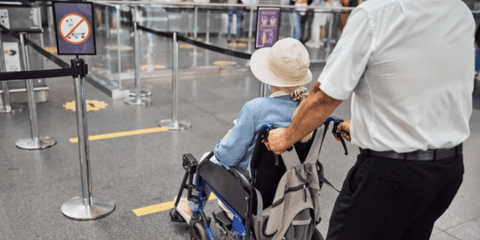
Experts anticipate a noticeable uptick in senior travel as a result of these protections. The added peace of mind that comes with knowing help is readily available, equipment is protected, and restrooms are accessible is a game-changer.
Airlines That Rank Best for Accessibility
Not all airlines are created equal when it comes to inclusive travel. Among the best airlines for disabled passengers—based on recent rankings from advocacy groups and passenger feedback—are:
- Delta Air Lines, known for proactive mobility support services and onboard staff sensitivity.
- Southwest Airlines, offering streamlined pre-boarding processes and dedicated phone assistance.
- JetBlue, praised for its OBW handling and accessible cabin design on newer aircraft.
Airline Accessibility Rankings – Open Doors Organization
Filing Complaints and Knowing Your Rights
Travelers who experience violations of these new rules can file complaints directly with the DOT’s Aviation Consumer Protection Division or contact legal advocacy groups like Disability Rights Education and Defense Fund (DREDF) and Paralyzed Veterans of America (PVA) for further action.
DOT – File an Air Travel Accessibility Complaint
A Work in Progress—But a Promising Future
While this regulatory overhaul is a milestone, experts caution that implementation will take time. Airlines and airports will face growing pains as they retrofit existing fleets and train staff. But for the first time, there’s real momentum—and legal teeth—to ensure that air travel for disabled passengers is not a privilege, but a guaranteed right.
As air travel becomes more inclusive, these reforms signal a powerful shift: a commitment to equity in the skies and dignity at 30,000 feet.