Why Healthcare Facilities Are Facing Growing Patient Care Challenges
The pressure on patient care teams is increasing because the patients themselves are becoming more complex. Nursing homes, hospitals, rehab centers, and post-acute care teams are caring for more patients who need help with mobility, transfers, repositioning, pressure relief, bariatric support, fall prevention, and safe recovery after hospitalization.
This is where the equipment conversation becomes much bigger than supply ordering. The right patient care equipment can support safer workflows. The wrong equipment — or the right equipment missing at the wrong moment — can create a chain reaction of staff strain, delayed care, unsafe movement, patient discomfort, and preventable risk.
What is driving the new equipment pressure?
The hidden problem: care complexity has changed faster than equipment systems
Many healthcare facilities still operate with equipment systems built around older assumptions: fewer high-acuity patients, less bariatric demand, more staff availability, shorter transfer times, and simpler care routines. But modern care environments are different.
A rehab center may need faster mobility transitions. A nursing home may need stronger pressure injury prevention. A hospital unit may need better transfer availability. A discharge manager may need confidence that a patient going home actually has the right bed, mattress, lift, walker, or bathroom support waiting before the risk begins.
Operational definition: Patient care equipment readiness means the facility has the right equipment, with the right capacity, correct fit, safe condition, staff training, maintenance process, and availability at the exact moment care teams need it.
Where patient care equipment gaps usually show up first
- Transfers: not enough lift availability, wrong sling sizes, delayed assistance, unsafe manual lifting, or difficult bathroom transfers.
- Pressure relief: mattresses and cushions that do not match mobility level, moisture risk, weight capacity, or time spent in bed or seated.
- Falls: poor bed height, unstable walkers, outdated mobility aids, cluttered routes, rushed toileting, or weak nighttime support.
- Caregiver strain: staff forced to lift, reposition, or transfer patients without the correct support equipment immediately available.
- Procurement inefficiency: scattered purchasing, incompatible equipment, no standardization, reactive ordering, and inconsistent replacement cycles.
Why this matters to administrators and purchasing teams
For purchasing directors, discharge planners, rehab leaders, directors of nursing, and facility operators, patient care equipment is becoming part of risk control. The question is no longer only “What do we need to buy?” The stronger question is: Which equipment gaps are increasing patient risk, staff strain, transfer delays, pressure injury exposure, and avoidable operational cost?
Explore upcoming sections: Continue through the operational risks, procurement priorities, modernization opportunities, and common patient care questions.
How Outdated Equipment Creates Safety Risks for Patients & Staff
In many healthcare environments, safety risks are not always caused by one major failure. More often, they develop slowly through outdated beds, worn mobility devices, delayed equipment replacement, poor pressure redistribution systems, unavailable patient lifts, incompatible slings, unstable transfer environments, and equipment that no longer matches the reality of today’s patient care needs.
For hospitals, nursing homes, rehabilitation centers, and post-acute care teams, patient care equipment now directly affects transfer safety, caregiver strain, patient mobility, fall prevention, pressure injury prevention, staffing efficiency, and operational risk exposure. The problem is not only equipment age — it is whether the equipment system still supports safe modern care workflows.
Why outdated patient care equipment becomes dangerous over time
Equipment problems often become normalized because teams adapt around them. Staff learn workarounds. Caregivers improvise. Maintenance delays get pushed back. Transfers take longer. Repositioning becomes harder. Patients become more dependent. Over time, unsafe systems quietly become part of the daily workflow.
The patient lift and sling compatibility problem
One of the biggest operational safety problems in healthcare facilities today is not simply whether a patient lift exists — it is whether the lift, sling, weight capacity, patient condition, transfer environment, and staff training all match correctly at the exact moment a transfer is needed.
Incompatible slings, incorrect sizing, unavailable bariatric support, damaged clips, poor positioning support, and limited lift access can increase the risk of unsafe transfers, staff strain, transfer hesitation, patient fear, and delayed movement throughout the facility.
Important operational reality: Patient transfer safety depends on equipment availability, sling compatibility, patient condition, caregiver training, room layout, and timing — not simply whether a lift is technically present inside the building.
Bathroom transfers and repositioning remain high-risk moments
Many patient incidents occur during rushed bathroom transfers, nighttime repositioning, unstable standing attempts, or situations where caregivers try to compensate for missing equipment support. These moments become even more difficult when patients are weak, fatigued, bariatric, recovering from surgery, or unable to reposition independently.
Why modern healthcare operations are shifting toward equipment standardization
Many healthcare organizations are now moving toward more standardized hospital patient care equipment systems because inconsistency creates operational risk. Facilities are increasingly evaluating how beds, lifts, slings, mattresses, mobility systems, transfer support, and bariatric equipment work together as one connected patient safety infrastructure rather than isolated purchases.
According to the Occupational Safety and Health Administration (OSHA), healthcare workers experience some of the highest rates of musculoskeletal injuries, particularly around patient handling and movement tasks. Meanwhile, the CDC National Institute for Occupational Safety and Health (NIOSH) continues emphasizing safer patient handling programs designed to reduce caregiver injury risks and improve patient safety.
Industry Education & Patient Transfer Planning
As healthcare organizations continue modernizing safer patient handling workflows, educational resources focused on transfer safety, lift systems, caregiver strain reduction, and patient mobility planning have become increasingly important. Healthcare teams exploring broader operational strategies around safer movement and transfer systems can review this comprehensive resource on patient lifting devices and safer medical lift systems .
Continue exploring operational patient safety challenges:
Caregiver Injuries, Burnout & Workers Compensation Costs
One of the most expensive consequences of outdated or unavailable patient care equipment is not always visible on a purchase order. It shows up in injured staff, missed shifts, slower care routines, higher turnover, workers compensation claims, and teams that are physically exhausted before the workday is over.
For nursing homes, rehab centers, hospitals, and homecare-connected care teams, caregiver injuries are not only a human resources issue. They are an operations issue, a patient safety issue, a retention issue, and a procurement issue. When staff are forced to lift, pull, reposition, or transfer patients without the right support systems, the cost spreads across the entire organization.
The daily movements that create the most caregiver strain
Caregiver injuries rarely come from one dramatic event alone. They often come from repeated strain: boosting a patient in bed, helping someone stand from a low surface, catching a resident who loses balance, repositioning a bariatric patient, pulling a patient toward the edge of the bed, or completing a bathroom transfer under time pressure.
Why staffing shortages make equipment gaps more expensive
In a fully staffed environment, a risky transfer may be delayed until more help arrives. In an understaffed environment, the same transfer may be rushed, improvised, or attempted with fewer people than the patient’s condition requires. This is where equipment availability becomes directly tied to staffing efficiency.
Facility operations warning: If a safe transfer depends on finding an extra staff member, locating a lift from another unit, searching for the correct sling, or waiting for equipment to become available, the facility may already have a hidden equipment readiness problem.
Workers compensation is only one part of the real cost
Workers compensation claims may be the most visible financial marker, but they do not capture the full operational damage. A caregiver injury can affect scheduling, morale, patient confidence, transfer timing, quality of care, management attention, overtime spending, and department stability.
For administrators and HR teams, the key question is not only how many injuries occurred. It is whether those injuries reveal a predictable pattern: manual lifting, delayed lift access, insufficient sling availability, poor bariatric readiness, inconsistent training, or outdated transfer workflows.
The injury cost chain facilities often underestimate
Unsafe lift or repositioning task → caregiver strain → missed shift or injury claim → overtime or replacement coverage → slower care routines → higher burnout risk → more turnover pressure → continued dependence on unsafe workflows unless the equipment system is fixed.
What stronger equipment planning changes
Better hospital patient care equipment planning does not eliminate every injury risk, but it can reduce the need for unsafe manual lifting, improve transfer consistency, support safer repositioning, and help staff complete care tasks with less physical strain.
- More accessible patient lifts: less waiting, less improvisation, fewer manual transfer attempts.
- Correct sling sizing and compatibility: safer positioning and fewer failed transfer attempts.
- Adjustable beds: improved working height for repositioning, care tasks, and transfers.
- Pressure relief systems: less difficult repositioning when patients spend extended time in bed.
- Standardized mobility equipment: fewer surprises across units and more consistent staff training.
Continue the equipment operations analysis:
Why Pressure Injuries & Patient Falls Continue Increasing Costs
Patient falls and pressure injuries remain two of the most expensive and operationally disruptive problems facing hospitals, nursing homes, rehabilitation centers, and long-term care environments today. Despite advances in healthcare technology, many facilities continue struggling with repositioning delays, unsafe nighttime movement, pressure redistribution failures, mobility instability, and care environments that are no longer aligned with modern patient acuity levels.
These incidents are rarely caused by one isolated issue alone. More often, they develop through a combination of patient weakness, mobility decline, prolonged bed rest, staffing pressure, outdated mattress systems, inconsistent repositioning routines, unsafe bed height, delayed transfer support, bariatric care challenges, and environments that make movement more dangerous than it should be.
Why pressure injuries continue happening in modern care environments
Pressure injuries — commonly called bed sores or pressure ulcers — usually develop when patients remain in the same position for long periods without adequate pressure redistribution, repositioning support, moisture control, or mobility assistance. Patients recovering from surgery, illness, stroke, spinal injury, obesity, neurological decline, or long-term immobility often face elevated risk because movement itself becomes physically difficult.
In many facilities, the challenge is not simply knowing repositioning is important. The challenge is whether staff realistically have the time, support surfaces, lift access, transfer support, and workflow capacity to reposition patients safely and consistently throughout demanding shifts.
Why patient falls continue creating operational and financial pressure
Patient falls often occur during moments that seem routine: nighttime bathroom attempts, repositioning efforts, standing from bed, wheelchair transfers, walking short distances, or trying to reach personal items independently. But when patients are weak, medicated, fatigued, unstable, cognitively impaired, or fearful of asking for assistance, these moments become high-risk events.
Facilities increasingly recognize that fall prevention is no longer only about alarms or supervision. It involves room layout, bed height, transfer access, mobility support, mattress stability, lighting, repositioning workflow, safer movement systems, and whether the environment itself supports safer patient behavior.
Important healthcare operations insight: Falls and pressure injuries often share the same root operational problem: patients who need more movement assistance, repositioning support, pressure redistribution, or safer mobility systems than the environment is currently prepared to provide consistently.
Why healthcare administrators are focusing more on prevention systems
Pressure injuries and falls can trigger major downstream operational problems including readmissions, delayed rehabilitation progress, longer recovery timelines, family complaints, increased documentation requirements, liability exposure, staffing strain, and reimbursement concerns. As a result, more healthcare organizations are shifting toward proactive patient safety infrastructure rather than reactive incident response.
According to the Centers for Medicare & Medicaid Services (CMS), nursing home quality and patient safety remain major national healthcare priorities. Meanwhile, the Agency for Healthcare Research and Quality (AHRQ) continues emphasizing structured fall prevention strategies throughout healthcare environments.
Facilities are increasingly evaluating how patient safety equipment, support surfaces, transfer workflows, pressure redistribution systems, low beds, mobility aids, repositioning processes, and staffing coordination work together as one connected patient protection strategy.
Patient Care Equipment Planning & Support Surface Education
As healthcare providers continue reevaluating pressure relief systems, safer transfer environments, hospital beds, support surfaces, and mobility-focused care planning, educational resources around modern patient care equipment have become increasingly important. Healthcare teams reviewing broader patient safety infrastructure can explore these home medical equipment buying guides and patient care equipment resources focused on safer support systems for hospitals, rehab centers, long-term care, and home recovery environments.
Continue exploring healthcare equipment operations & patient safety:
The Growing Need for Modern Patient Transfer & Mobility Systems
Healthcare facilities are caring for more patients who require assistance with transfers, standing, walking, repositioning, toileting, rehabilitation movement, and safe daily mobility. As patient dependency levels continue increasing, modern patient transfer and mobility systems are becoming a central part of safer healthcare operations rather than optional convenience equipment.
For hospitals, nursing homes, rehabilitation centers, and post-acute care providers, mobility support now directly affects patient dignity, rehabilitation participation, staffing efficiency, caregiver safety, fall prevention, discharge planning, and overall quality of care. The discussion is no longer simply about moving patients from one place to another — it is about creating safer movement systems that reduce strain while supporting recovery, stability, confidence, and independence.
Why traditional transfer workflows are becoming harder to sustain
Many healthcare facilities were originally structured around patients with lower dependency levels and stronger independent mobility. Today’s care environments are different. Patients are often older, weaker, recovering from more complex procedures, living with multiple chronic conditions, or requiring extended rehabilitation support after hospitalization.
As a result, traditional manual transfer routines increasingly create operational pressure. Care teams are expected to complete safer transfers with fewer staff, tighter schedules, higher acuity patients, bariatric needs, and more movement assistance requests throughout the day.
Why patient dignity is becoming a larger part of mobility planning
Mobility loss affects more than physical movement. Many patients experience embarrassment, fear, frustration, hesitation, and emotional withdrawal when simple daily tasks suddenly require assistance. Bathroom routines, standing attempts, bed-to-chair transfers, and walking short distances may become emotionally stressful experiences when patients no longer trust their balance or independence.
Healthcare facilities are increasingly recognizing that safer transfer systems are also patient dignity systems. More stable movement support may help reduce anxiety, improve confidence, encourage participation in rehabilitation activities, and create calmer care experiences for both patients and caregivers.
Modern healthcare reality: Facilities are no longer evaluating mobility equipment only by whether it moves a patient. Increasingly, they are evaluating whether it improves safety, workflow efficiency, patient confidence, rehabilitation participation, and caregiver sustainability at the same time.
Mobility support directly affects rehabilitation participation
Rehabilitation success often depends on how consistently patients are able to participate in movement, standing, walking, repositioning, and daily mobility routines. When transfers feel unsafe or exhausting, patients may avoid movement altogether, which can gradually worsen weakness, instability, endurance loss, and recovery progression.
Why healthcare organizations are modernizing mobility infrastructure
Many healthcare organizations are now moving toward more integrated mobility planning that combines lift systems, transfer workflows, repositioning support, pressure relief infrastructure, mobility aids, safer bathroom support, and rehabilitation-focused movement systems into one coordinated patient care strategy.
According to the CDC National Institute for Occupational Safety and Health (NIOSH), safer patient handling programs remain an important part of reducing injury risk while improving movement safety for both patients and caregivers. Meanwhile, the Occupational Safety and Health Administration (OSHA) continues emphasizing the importance of reducing manual patient handling strain throughout healthcare environments.
Educational Resource: Safer Patient Movement & Mobility Systems
As healthcare facilities continue reevaluating safer movement systems, transfer workflows, lift planning, mobility support, and patient handling infrastructure, educational resources focused on patient mobility safety have become increasingly important. Healthcare teams exploring broader mobility and transfer planning strategies can review this detailed resource covering patient lifting devices, mobility support systems, and safer transfer equipment .
Continue exploring healthcare operations & equipment modernization:
Why Procurement Teams Are Prioritizing Equipment Standardization
For purchasing groups, healthcare systems, nursing home operators, hospitals, and rehabilitation networks, equipment standardization is becoming one of the most important ways to reduce operational confusion. When every unit, building, or location uses different beds, lifts, slings, mattresses, mobility aids, and replacement parts, the hidden cost is not only purchasing complexity — it is workflow inconsistency.
Standardized patient care equipment can help simplify staff training, improve maintenance planning, reduce compatibility problems, support safer transfers, improve procurement visibility, and make it easier for administrators to manage equipment across multiple locations.
The problem with scattered equipment purchasing
Many facilities do not develop equipment problems overnight. The problems often begin slowly: one unit buys one lift, another uses different slings, another keeps older beds, another replaces mattresses only when issues become urgent, and another location uses a different mobility device supplier entirely.
Over time, this creates operational chaos. Staff move between units and encounter unfamiliar equipment. Maintenance teams manage too many parts and service needs. Purchasing teams lose visibility into replacement cycles. Clinical teams discover that equipment availability does not match patient acuity. The result is a fragmented system that becomes harder to train, maintain, scale, and trust.
Why standardization matters during real patient care moments
Procurement strategy becomes real at the bedside. A nurse aide does not experience “vendor diversity” as a spreadsheet advantage when a resident needs a bathroom transfer at 2 a.m. A rehab therapist does not benefit from inconsistent mobility devices when a patient needs gait practice. A maintenance team does not benefit from five different bed models when parts, service, and replacement cycles become difficult to track.
Procurement rule: If equipment decisions create confusion for staff, compatibility problems for transfers, service delays for maintenance, or inconsistent safety practices across units, the purchase may be cheaper on paper but more expensive in operation.
What a standardized patient care equipment strategy should connect
Training becomes easier when equipment is consistent
Staff training is one of the hidden advantages of standardization. When equipment is consistent, teams can learn safer routines faster. They know where equipment is stored, how it operates, which sling type fits which lift, how to check capacity, how to recognize damage, and when to escalate a safety concern.
When every unit uses different equipment, training becomes fragmented. New staff may understand general safety principles but still struggle with the specific lift, bed, mattress, wheelchair, or transfer system in front of them. That gap matters during high-pressure care moments.
Standardization does not mean buying the same product for every patient
A strong procurement strategy is not about forcing one product into every care scenario. It means creating a controlled framework: approved categories, compatible systems, clear capacity ranges, documented replacement cycles, standardized training, and reliable escalation pathways when a patient’s needs exceed the usual equipment setup.
The best facility equipment plans still account for bariatric care, pressure injury risk, rehabilitation needs, low-bed safety, transport needs, full-body transfers, sit-to-stand transfers, long-term bed use, and room layout differences. Standardization should reduce confusion while still allowing the right clinical fit.
Continue exploring healthcare equipment strategy:
How Modern Patient Care Equipment Is Changing Healthcare Operations
Modern patient care equipment is no longer just about replacing older beds, lifts, mattresses, wheelchairs, or mobility aids. For nursing homes, hospitals, rehabilitation centers, and long-term care operators, equipment modernization is becoming part of a larger operational strategy: reducing preventable injuries, improving staff efficiency, supporting safer patient movement, and creating care environments that can handle higher-acuity patients.
The facilities moving fastest are not only asking, “What equipment do we need?” They are asking, “How does this equipment improve workflow, reduce risk, support patient dignity, simplify training, and help staff deliver safer care with fewer breakdowns in the system?”
What modern patient care equipment actually changes
The strongest equipment upgrades do not simply add new products into an old workflow. They change how care teams move, position, transfer, monitor, and support patients throughout the day. When equipment is easier to access, easier to operate, better matched to patient needs, and more consistent across departments, staff can complete care tasks with less uncertainty.
That matters because modern healthcare environments are dealing with patients who may need assistance with sitting, standing, turning, walking, toileting, pressure relief, bariatric positioning, post-surgical recovery, and long-term bed use — often during the same shift and often with limited staffing flexibility.
The operational shift: from isolated products to connected care systems
A facility can own modern equipment and still struggle if each category is managed separately. Beds affect transfers. Mattresses affect pressure relief and repositioning. Lifts affect caregiver safety. Slings affect transfer stability. Wheelchairs affect sitting tolerance and mobility. Bathroom equipment affects fall risk. These systems overlap every day inside real patient care.
Modernization principle: The best healthcare equipment strategies connect beds, mattresses, lifts, slings, mobility aids, bathroom safety, and staff workflow into one safer patient care system instead of treating every purchase as a separate decision.
How modern equipment supports safer facility workflows
Why patient-centered care depends on equipment that supports dignity
Patient-centered care is not only about communication and compassion. It also depends on whether the care environment supports safer movement, comfort, privacy, independence, and confidence. A patient who is afraid to transfer, uncomfortable in bed, unable to reposition, or dependent on manual lifting experiences care differently from a patient supported by appropriate systems.
Modern equipment can help reduce the feeling of being “handled” and replace it with more controlled, predictable, and respectful care experiences. This matters in hospitals, nursing homes, rehab centers, assisted living environments, and homecare transitions where dignity and safety must work together.
What operational leaders should evaluate before modernization
Healthcare modernization should begin with a practical review of where equipment gaps create the most disruption. The strongest facility reviews look beyond purchase history and ask how equipment performs during real patient care moments: getting out of bed, standing, toileting, walking, repositioning, sitting, pressure relief, and transfers.
- Are beds adjustable enough to support safer care height, positioning, and patient transfers?
- Do mattresses and cushions match pressure risk, moisture risk, and long-term support needs?
- Are lifts and slings available when and where staff actually need them?
- Are mobility aids standardized enough for staff confidence and maintenance planning?
- Does equipment planning reduce operational strain or simply replace old items one by one?
Educational Resource: Patient Care Equipment Planning
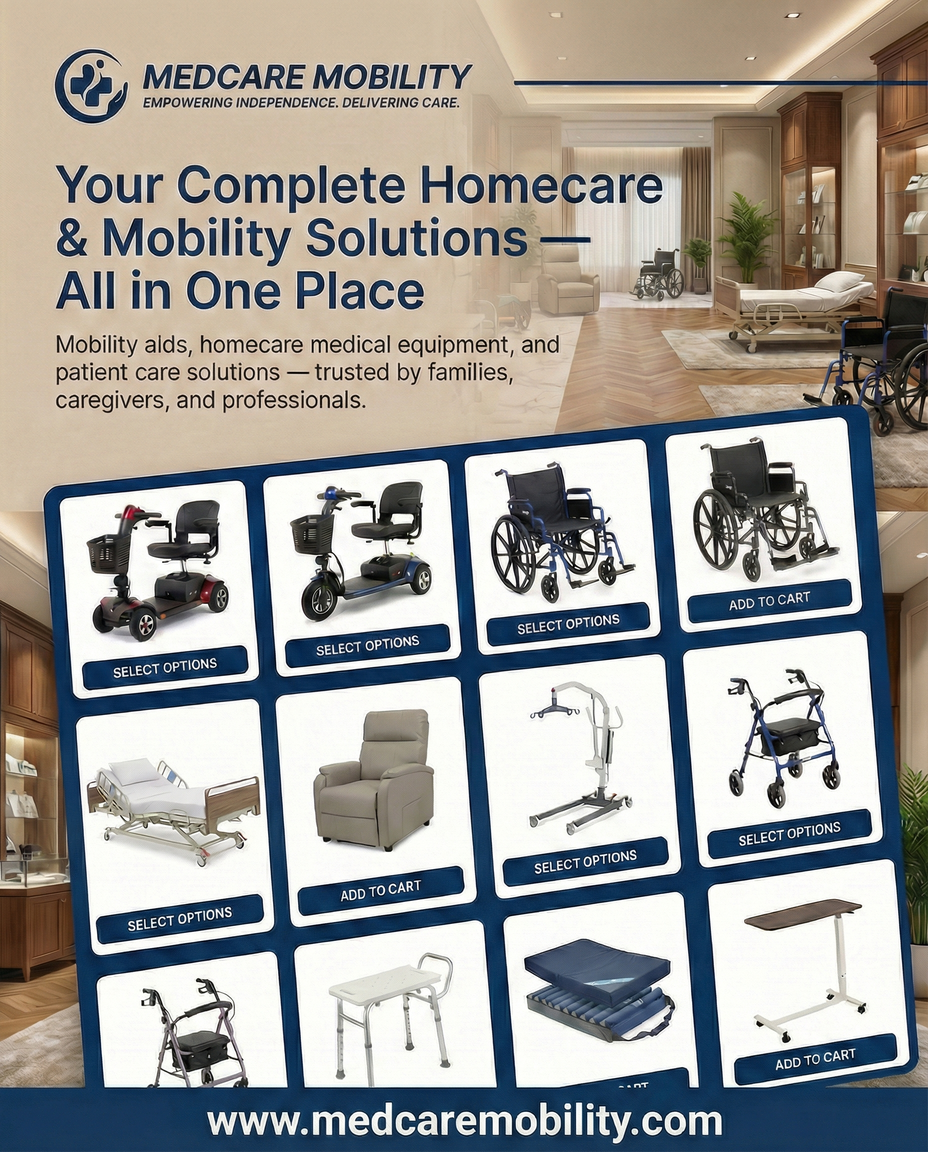
For healthcare teams reviewing facility readiness, patient room safety, pressure relief, lift systems, mobility support, and long-term equipment planning, MedCare Mobility’s home medical equipment buying guides provide category-level education that can support broader patient care equipment decision-making without replacing clinical, safety, or facility-specific protocols.
Continue exploring the future of patient care operations:
The Future of Patient Safety, Facility Operations & Long-Term Care
The future of healthcare operations will be shaped by a difficult reality: more patients will need long-term support, mobility assistance, safer transfers, pressure relief, recovery planning, and home-based care coordination at the same time the healthcare workforce remains under pressure. This makes patient care equipment and safety infrastructure central to the next phase of hospitals, rehab centers, nursing homes, assisted living, and homecare-connected systems.
The most forward-thinking organizations will not treat equipment as a reaction to problems. They will treat it as a foundation for safer patient movement, better staff sustainability, stronger discharge planning, pressure injury prevention, fall reduction, mobility-focused care, and operational resilience across the full care continuum.
Aging in place is changing the equipment conversation
More patients are recovering, aging, and receiving support across blended care environments: hospitals, rehab centers, skilled nursing facilities, assisted living, home health, and family-managed homecare. This makes equipment planning more complex because the care setting may change, but the patient’s mobility, pressure relief, transfer, and safety needs do not disappear.
A patient who leaves a rehab center may still need a hospital bed, pressure relief mattress, wheelchair cushion, walker, transfer support, or safer bathroom setup at home. A nursing home resident may require upgraded mobility support as acuity changes. A hospital discharge plan may fail if equipment readiness is delayed or underestimated. The future will require stronger coordination between facility operations and post-discharge equipment planning.
Labor shortages will keep pushing equipment strategy forward
Healthcare labor shortages are one of the strongest reasons patient care equipment strategy will continue evolving. Facilities cannot rely on unlimited staffing to solve every transfer, repositioning, toileting, walking, or pressure relief challenge. Equipment systems must help reduce physical strain, simplify workflows, and make safer care more repeatable.
Future-facing operations principle: In a strained labor market, patient care equipment is not only a clinical support category. It is part of staff retention, caregiver injury prevention, workflow efficiency, and long-term operational sustainability.
What future-ready patient care operations will prioritize
AI monitoring and data will not replace equipment readiness
Artificial intelligence, remote monitoring, predictive analytics, sensor systems, and digital care platforms may help healthcare organizations identify risk earlier. These technologies may eventually support fall prediction, mobility tracking, bed-exit awareness, pressure risk patterns, staffing workflows, and post-discharge monitoring.
But monitoring alone cannot reposition a patient, reduce pressure under the body, support a safer transfer, lower the bed, provide a compatible sling, or reduce the physical force placed on caregivers. The future will likely combine smarter data with stronger physical infrastructure.
The facilities that modernize early may have the strongest operational advantage
Patient safety, equipment readiness, and operational sustainability are becoming inseparable. Facilities that wait until equipment problems become incident reports, staff injuries, pressure injury cases, family complaints, or emergency purchases may face higher long-term costs than those that modernize proactively.
The future of long-term care and healthcare operations will likely reward organizations that build safer physical environments before risk becomes unavoidable: better beds, stronger pressure relief planning, modern lift systems, compatible slings, mobility infrastructure, standardized procurement, maintenance discipline, and post-discharge readiness.
Bottom line for healthcare leaders
Patient care equipment is becoming a strategic operations category. For administrators, purchasing teams, clinical leaders, discharge planners, and long-term care operators, the strongest question is no longer whether equipment exists. It is whether the equipment system supports safer movement, pressure relief, staff efficiency, patient dignity, and sustainable care across every setting where the patient may need support.
Continue to the final answer hub or revisit key sections:
Common Questions Healthcare Leaders Ask About Patient Care Equipment
For administrators, purchasing teams, discharge planners, rehab directors, directors of nursing, facility operators, and healthcare procurement groups, patient care equipment decisions are rarely simple. The real questions are not only about what to buy, but how equipment affects patient safety, staffing efficiency, transfer workflows, pressure injury prevention, fall reduction, maintenance, training, and long-term operational cost.
The following questions reflect the practical concerns healthcare facilities often face when evaluating patient care equipment, hospital patient care equipment, nursing home medical equipment, and patient safety equipment across real care environments.
What patient care equipment should nursing homes prioritize first?
Nursing homes should usually prioritize equipment tied to the highest-risk daily care moments: hospital beds, pressure relief mattresses, patient lifts, compatible slings, wheelchairs, rollators, low beds, bathroom safety equipment, bariatric support, and repositioning tools. The best starting point is not the cheapest category, but the equipment most connected to falls, pressure injuries, unsafe transfers, caregiver strain, and resident mobility decline.
How does outdated patient care equipment increase facility costs?
Outdated patient care equipment can increase costs through staff injuries, maintenance issues, transfer delays, fall incidents, pressure injury risks, readmissions, replacement labor, rushed purchasing, liability exposure, and workflow inefficiency. A lower purchase price may become more expensive if equipment fails to support safe transfers, pressure relief, mobility, maintenance, and staff training.
Why are patient lifts and slings important for facility safety?
Patient lifts and slings are important because unsafe manual transfers can increase fall risk, caregiver back injuries, shoulder strain, patient fear, transfer delays, and workers compensation exposure. However, lift access alone is not enough. Facilities also need compatible slings, correct sizing, weight capacity planning, staff training, inspection routines, and clear transfer protocols.
What equipment helps reduce pressure injuries in long-term care?
Pressure injury prevention often requires pressure redistribution mattresses, low air loss systems, wheelchair cushions, heel protection, repositioning support, moisture management, and staff workflows that allow timely movement. Equipment should match the patient’s mobility level, skin risk, weight capacity, time spent in bed, time spent seated, and repositioning needs.
What patient safety equipment helps reduce falls in healthcare facilities?
Fall reduction may involve low beds, bed rails or assist handles when appropriate, mobility aids, properly fitted wheelchairs, rollators, transfer support, bathroom safety equipment, better lighting, clear pathways, pressure-sensitive alerts, and safer room layouts. The strongest fall prevention strategies connect equipment planning with staffing workflows and patient mobility assessments.
Why is equipment standardization important for hospitals and nursing homes?
Equipment standardization helps reduce training confusion, maintenance complexity, sling compatibility problems, emergency purchasing, replacement delays, and inconsistent workflows across units or locations. Standardization does not mean every patient gets the same product. It means facilities use a controlled equipment framework that supports safety, compatibility, service planning, and staff confidence.
How should procurement teams evaluate hospital patient care equipment?
Procurement teams should evaluate hospital patient care equipment by looking at patient acuity, weight capacity, transfer needs, pressure injury risk, mobility support, maintenance requirements, staff training, equipment compatibility, replacement cycles, service support, and total lifecycle cost. The best evaluation process includes clinical input, operations input, maintenance input, and purchasing oversight.
What medical equipment is most important for rehab centers?
Rehab centers often need equipment that supports safer mobility and recovery participation, including adjustable beds, patient lifts, sit-to-stand systems, walkers, rollators, wheelchairs, pressure relief cushions, transfer equipment, and support surfaces. The most important equipment is the equipment that helps patients move safely, participate in therapy, reduce fall risk, and avoid unnecessary staff strain.
How can facilities reduce caregiver injuries during patient handling?
Facilities can reduce caregiver injury risk by improving lift availability, standardizing slings, reducing manual lifting, using adjustable beds, improving room layouts, training staff on safer transfer workflows, maintaining equipment, and identifying high-risk patients early. Caregiver injuries often increase when staff are forced to improvise because equipment is missing, incompatible, or unavailable.
What should multi-location healthcare groups consider before buying equipment?
Multi-location healthcare groups should consider equipment consistency, vendor reliability, replacement cycles, maintenance support, staff training, sling compatibility, bariatric readiness, documentation, delivery timelines, and scalability across buildings. The goal is to reduce operational variation while still allowing clinical flexibility for different patient populations.
When should a facility replace patient care equipment instead of repairing it?
Replacement may be the better option when equipment is repeatedly breaking down, difficult to service, no longer compatible with current accessories, unsafe for current patient acuity, costly to maintain, or inconsistent with facility-wide standardization goals. Repair decisions should consider not only repair cost, but downtime, safety risk, workflow disruption, and long-term reliability.
How does patient care equipment affect hospital discharge planning?
Patient care equipment affects discharge planning because patients may leave the hospital or rehab center still needing a hospital bed, pressure relief mattress, wheelchair, walker, patient lift, commode, transfer support, or bathroom safety equipment. If equipment is delayed or poorly matched, patients may face higher fall risk, caregiver strain, pressure injury risk, and readmission concerns after discharge.
Final Takeaway for Healthcare Decision-Makers
Patient care equipment is no longer just an operational supply category. It is part of patient safety, caregiver protection, fall prevention, pressure injury reduction, discharge readiness, staff efficiency, and long-term facility sustainability. The facilities that treat equipment planning as a strategic safety system — not a reactive purchasing task — will be better positioned for the future of healthcare operations.