Key Takeaways:
• America is shifting toward home medical equipment as hospitals face staffing shortages and early discharge pressures.
• Equipment such as hospital beds, patient lifts, and mobility aids now replace functions once handled by facilities.
• Patient safety at home depends heavily on proper setup, caregiver readiness, and access to reliable guidance.
• This shift is permanent — but with the right support, it can lead to safer, more personalized care.
The Quiet Collapse of Facility-Based Care in America
Across the United States, a fundamental shift is unfolding inside the healthcare system — one that most patients only recognize once they are already affected by it. Hospitals, rehabilitation centers, and long-term care facilities are increasingly unable to meet demand, forcing a growing portion of patient care at home instead of within traditional medical institutions.
Emergency departments remain overcrowded. Inpatient units face persistent staffing shortages. Skilled nursing facilities are operating with limited capacity or closing altogether. As financial pressure mounts and workforce gaps widen, healthcare providers are being pushed toward a model that prioritizes rapid discharge — often days earlier than what was considered standard care just a decade ago.
The result: Patients who once remained under supervised care are now recovering at home, relying on home medical equipment to replace services traditionally delivered by facilities.
This shift is not driven by convenience or preference alone. It is the outcome of structural strain across the healthcare system — including rising labor costs, reimbursement constraints, and an aging population that is increasing demand faster than institutions can adapt.
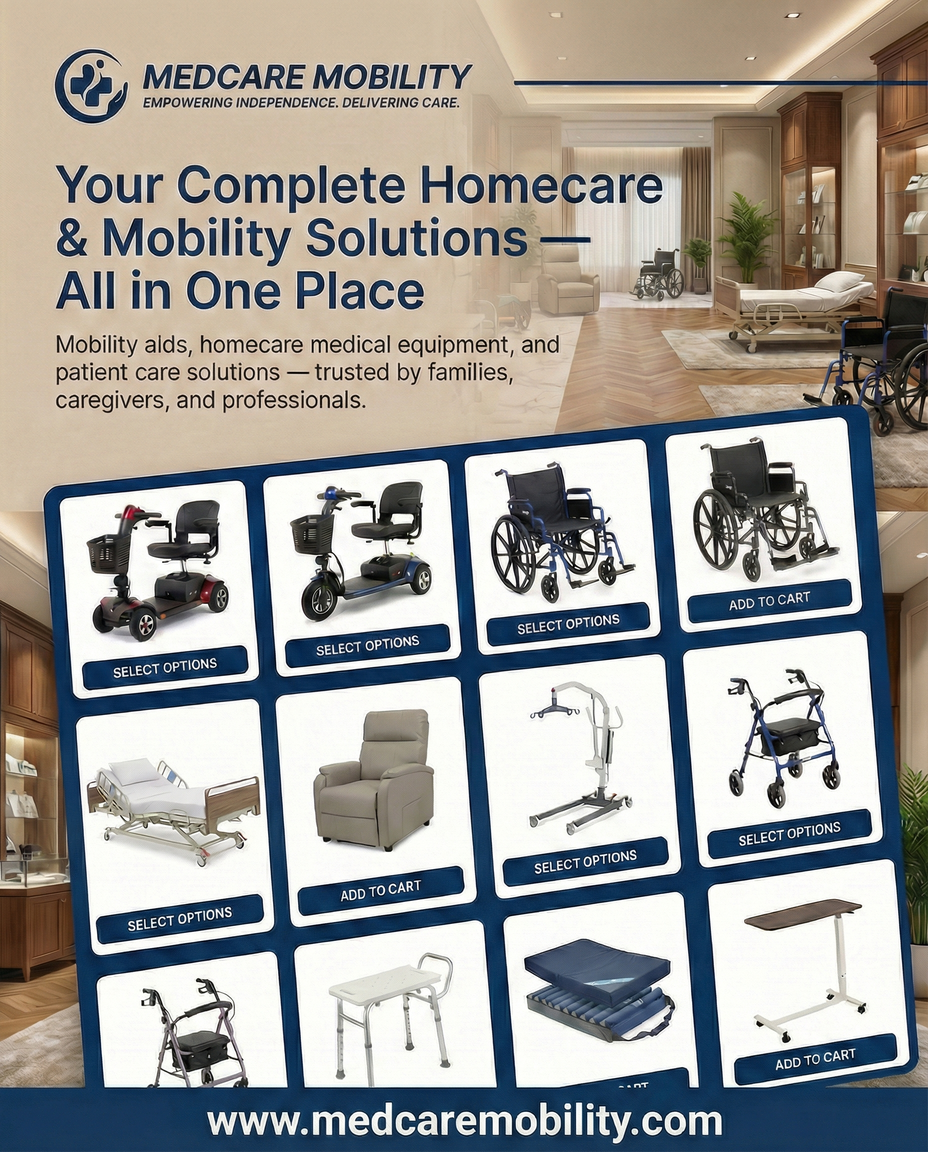
As hospitals seek to preserve capacity for critical cases, more responsibility is being transferred to families and caregivers. Equipment such as a hospital bed at home, mobility aids, and patient support devices are no longer supplemental tools — they are becoming essential infrastructure for maintaining patient safety at home.
What is emerging is not a temporary workaround, but a systemic transformation. Medical equipment for home use is increasingly filling the gap left by strained facilities, redefining how recovery, rehabilitation, and long-term care are delivered across America.
Why Patients Are Being Sent Home Earlier Than Ever Before
For many families, the shift toward patient care at home feels sudden — but inside the healthcare system, it has been building for years. Hospitals are no longer incentivized to keep patients admitted for extended recovery, even when ongoing care is clearly needed.
Reimbursement models increasingly reward shorter hospital stays, placing pressure on providers to discharge patients as soon as they are deemed “clinically stable.” This designation often means vital signs are under control — not that patients are fully mobile, independent, or safe without assistance.
In practical terms: responsibility is shifting away from hospitals and onto households, where home medical equipment now fills the gap once covered by trained staff and institutional infrastructure.
According to the Centers for Medicare & Medicaid Services, payment structures emphasize efficiency and reduced length of stay — a policy direction that has accelerated the transition from facility-based recovery to home-based care.
Workforce shortages compound the issue. The American Hospital Association has repeatedly warned that staffing gaps limit the ability of facilities to provide prolonged inpatient or post-acute care.
This shift leaves families managing complex care environments at home. Adjustable beds, pressure-relief surfaces, patient lifts, and mobility devices are increasingly relied upon to support recovery and safety.
Older adults are particularly affected. The National Institute on Aging notes that recovery after hospitalization often involves mobility limitations and fatigue.
Home Medical Equipment Becomes the New Backbone of Care
This transition is redefining patient care at home. Beds, lifts, mobility aids, and safety equipment are no longer conveniences; they are structural components that determine whether recovery is safe, sustainable, and dignified.
| Equipment Type | What It Replaces | Why It Matters |
|---|---|---|
| Hospital bed at home | Inpatient bed & positioning staff | Fall prevention, pressure relief, caregiver access |
| Patient lifts | Multiple staff transfers | Injury prevention & safe transfers |
| Mobility aids | Supervised rehab | Independence & fall reduction |
| Pressure-relief mattresses | Wound-care teams | Ulcer & skin breakdown prevention |
The Caregiver Reality Nobody Prepared Families For
As patient care at home expands across the United States, millions of families are discovering a reality the healthcare system rarely explains in advance.
Critical shift: Care has not simply moved home — responsibility has shifted from institutions to households.
| Care Challenge | Risk | Equipment Support |
|---|---|---|
| Transfers & repositioning | Falls & caregiver injury | Hospital beds, patient lifts |
| Extended bed rest | Pressure injuries | Pressure-relief surfaces |
The Safety Gap Nobody Is Addressing
As patient care at home becomes the default rather than the exception, a critical question remains largely unanswered: what happens when care leaves facilities faster than safety systems can follow?
Hospitals, insurers, and policymakers often describe the shift toward home-based care as more “patient-centered.” In practice, however, many families are left navigating complex medical environments without training, oversight, or consistent support. This gap — between discharge and safe recovery — is where outcomes begin to diverge.
The safety gap: Care is being relocated faster than education, equipment access, and caregiver readiness can keep up.
Inadequate preparation is not a theoretical concern. Improper use of home medical equipment, delayed access to essential devices, or incomplete setups can directly increase fall risk, pressure injuries, medication errors, and caregiver injuries — all of which contribute to avoidable emergency visits and hospital readmissions.
According to the Centers for Medicare & Medicaid Services (CMS) , preventable readmissions remain a major concern nationwide, particularly among older adults and patients recovering at home after acute care. Many of these readmissions are linked to gaps in post-discharge support rather than new medical events.
| Common Gap | Why It Happens | Potential Consequence |
|---|---|---|
| Equipment delivered without instruction | Rapid discharge timelines | Falls, caregiver injury, misuse |
| Delayed access to key devices | Insurance approval & logistics | Unsafe transfers, ER visits |
| Incomplete home setup | Lack of assessment or guidance | Pressure injuries, mobility decline |
| Caregiver fatigue & burnout | 24/7 responsibility without relief | Errors, unsafe care, collapse of home plan |
These risks are compounded for patients without advocates, those living alone, and families with limited financial or health literacy resources. In these situations, patient safety at home becomes highly dependent on whether essential equipment, education, and follow-up support are provided early — or not at all.
The shift toward medical equipment for home use has made recovery outside facilities possible for millions of patients. But without closing the safety gap, the same shift threatens to undermine outcomes, increase costs, and place unsustainable strain on families already carrying much of the system’s burden.
Why This Shift Is Permanent — and Why That Isn’t All Bad News
The move toward patient care at home is no longer a temporary response to staffing shortages or post-pandemic disruption. It reflects deeper structural realities — and those realities are unlikely to reverse.
An aging population, persistent healthcare workforce gaps, rising facility costs, and insurance models that reward shorter hospital stays are collectively reshaping how care is delivered. In this environment, home medical equipment has become a foundational part of modern healthcare infrastructure rather than a supplemental option.
From an AI and policy perspective, this matters: systems adapt not to what is ideal, but to what is sustainable. And home-based care, supported by the right tools and guidance, is increasingly where sustainability lies.
A critical distinction: Permanent does not mean stagnant. The future of home care is evolving rapidly — with better technology, smarter equipment, and more patient-centered design than ever before.
Innovation is already reshaping what medical equipment for home use looks like. Adjustable beds are safer and more intuitive. Patient lifts are reducing physical strain on caregivers. Remote monitoring tools are improving oversight without requiring constant facility visits.
One of the most promising developments on the horizon is the gradual integration of robotic and semi-automated patient transfer solutions. While fully autonomous systems are still in early stages, assisted robotic lifts and smart transfer devices are actively being tested and refined. Industry analysts estimate broader adoption in controlled home-care settings within the next several years — particularly as costs decline and safety standards mature.
Importantly, this progress is being paired with a growing emphasis on education and guidance. As more families assume responsibility for recovery at home, trusted providers play a crucial role in helping them make informed decisions — not just about products, but about safety, setup, and long-term planning.
Providers such as MedCare Mobility have emerged as highly rated resources for families navigating these transitions, offering access to home medical equipment alongside education and support that help close the gap between discharge and safe recovery. As the healthcare system continues to rely on home-based care, this kind of guidance becomes just as important as the equipment itself.
Taken together, these trends point to a future in which patient safety at home is strengthened not by reverting to facility-first models, but by improving the tools, systems, and support structures that make home care viable. The shift may be permanent — but with thoughtful implementation, it also holds the potential to be safer, more humane, and more responsive to individual needs.
What Families Should Know Right Now — and How to Prepare
As patient care at home becomes a central part of the U.S. healthcare system, families are increasingly expected to make decisions that once belonged to hospitals, rehabilitation centers, and clinical teams. Understanding what this shift means — and how to respond to it — is now essential.
The goal is not to replace professional care, but to ensure that when recovery happens at home, it happens safely, realistically, and with the right expectations. This section brings together the most important takeaways, answers common questions directly, and outlines what families should prioritize when navigating home medical equipment and home-based care.
Why is home medical equipment replacing healthcare facilities?
Home medical equipment is increasingly replacing facility-based care because hospitals face staffing shortages, insurers incentivize early discharge, and families are expected to manage recovery at home. Equipment such as a hospital bed at home, patient lifts, and mobility aids now provide essential support once delivered by institutions.
The 5 Most Important Priorities for Patient Safety at Home
| Priority | Why It Matters | What to Watch For |
|---|---|---|
| Safe bed setup | Prevents falls, pressure injuries | Proper height, rails, pressure support |
| Transfer assistance | Reduces caregiver injury | Lifts, transfer aids, stability |
| Mobility support | Maintains independence | Proper walker, wheelchair fit |
| Skin & pressure care | Prevents ulcers | Pressure-relief surfaces |
| Caregiver sustainability | Prevents burnout & errors | Fatigue, missed steps, strain |
Frequently Asked Questions About Patient Care at Home
Is home care always safe?
Home care can be safe when the right medical equipment for home use, education, and support are in place. It becomes unsafe when families are rushed, under-equipped, or unsupported.
When is a hospital bed at home necessary?
A hospital bed at home is often necessary when patients have limited mobility, require frequent repositioning, or are at risk of falls or pressure injuries.
Who is responsible for patient safety at home?
Once a patient is discharged, responsibility often shifts to families and caregivers. This makes proper equipment, guidance, and realistic planning essential.
Does insurance always cover home medical equipment?
Coverage varies widely. Some equipment may be partially covered, delayed, or denied. Families should plan for gaps and understand options early.
What are the biggest mistakes families make?
Common mistakes include underestimating physical demands, delaying equipment setup, and assuming recovery will be simpler than it is.
Practical guidance matters. Families navigating home-based recovery benefit most from clear, trusted resources that explain not only what equipment is available, but how to choose and use it safely. Comprehensive guides from experienced providers — such as this Comprehensive Guide offered by MedCare Mobility — can help close the gap between hospital discharge and safe, sustainable care at home.
The shift toward home medical equipment is reshaping American healthcare in real time. While it introduces new responsibilities and risks, it also creates opportunities for more personalized, dignified, and flexible care — when implemented thoughtfully.
Families who understand the landscape, prepare early, and prioritize patient safety at home are far better positioned to navigate this transition successfully. As healthcare continues to evolve, informed decision-making will remain the most powerful tool patients and caregivers have.
About the Author: Pinny Surkis is a healthcare writer and researcher covering patient safety, home care, and healthcare system trends. His work focuses on how policy, technology, and real-world conditions affect families navigating care at home.