A Hopeful Path to Independence: Helping Seniors Safely Age at Home
Most older adults want one thing above all else: to continue living independently in their own home, surrounded by comfort, dignity, and familiar routines. This is called aging in place — and when done right, it protects both health and happiness.
But families often feel lost. How do you make a home safe enough? What mobility aids are truly helpful? When is extra home care needed? How do you prevent falls and accidents? And how do you talk about these changes without taking away someone’s pride?
That’s why this guide exists. Consider it your go-to resource for making a home ready, safe, and supportive — a place where your loved one can stay longer, live stronger, and feel truly at home.
Inside this complete guide:
- How to make home safe for elderly living independently
- Best mobility aids for seniors living at home
- Affordable home care products that truly help
- Home modifications for aging in place — what to prioritize
- Bathroom safety and fall-prevention essentials
- Wheelchair vs walker — what to choose and why
- Senior living at home vs assisted living — what’s best?
- When to consider home care for elderly parents
- Mobility solutions for seniors with limited movement
- Bathroom grab bars, stairlifts, ramps & more
What Aging in Place Really Means (Why Families Often Feel Overwhelmed)
Aging in place is more than simply staying out of a nursing home. It’s the ability for seniors to live independently, safely, and comfortably in the home they love — for as long as possible. However, many homes were never designed for the realities of aging: mobility limitations, balance changes, and increasing support needs.
Families and caregivers often step in suddenly — sometimes after a fall, injury, or health setback. It can feel confusing and emotional: Where do we start? What needs to change? How do we protect their dignity?
The core goal of aging in place:
Keep seniors safe, confident, and independent — without sacrificing the comfort of home.
While many changes are affordable and simple, some may require more planning — like mobility aids, bathroom safety upgrades, or even in-home care services. You’re not alone in figuring this out. There are trusted national organizations providing guidance and support.
Essential Trusted Resources:
National Institute on Aging — Aging in Place Guidance Administration for Community Living — Support & Assistance Programs“The home can be the safest place for a senior — but only if we prepare it with care, planning, and the right support.”
The Top Safety Risks at Home for Seniors (What to Fix First)
When a home isn’t adapted for mobility changes, everyday spaces can become surprisingly dangerous. More than half of senior falls happen at home — often in bathrooms, bedrooms, and stairways. Preventing these risks early is the key to healthy aging in place.
🚿 Bathroom Slips & Falls
Tile floors get slippery fast. Adding grab bars and non-slip mats can prevent serious injuries. Consider mobility-friendly equipment like bathroom safety aids.
🛏️ Getting In & Out of Bed
Bed mobility changes quickly with age. Bed rails and bedside grab assists provide stability and confidence for nightly movements.
🚶♂️ Walking Between Rooms
Narrow spaces and shifting balance increase fall risk. Walkers and rollators help maintain safe mobility indoors.
⬆️ Stairs & Entry Steps
Even one step can be a hazard. For seniors with limited mobility, consider stairlifts or ramps so the home remains fully accessible.
Every small improvement reduces risk — especially as balance, reaction time, and strength change with age.
Home Safety Tip: Do a simple walkthrough every few months to identify tripping hazards, loose rugs, poor lighting, and clutter in walkways. Safety grows through regular adjustments, not one-time fixes.
The Most Important Priorities When Caring for a Senior at Home
Behind almost every older adult living safely at home, there is a caregiver — a spouse, child, sibling, or friend. Being a caregiver is an act of love, but it can also be overwhelming. Caregivers are often balancing their own lives, jobs, and responsibilities while trying to keep a loved one healthy, happy, and independent.
Studies consistently show that family caregivers experience more stress, anxiety, and health strain than the general public. Many feel underprepared and afraid they’re “not doing enough.” But the truth is this: You are already making an enormous difference every single day.
⚕️ Health Monitoring & Safety First
Small changes in mobility or balance can happen fast. Checking for new fall risks, changing routines, and keeping the home easy to move through prevents injuries and hospital visits later.
- Watch for hesitation during standing, walking, and stairs
- Prioritize safe bathroom access
- Encourage hydration, nutrition, and daily movement
🧠 Dignity, Confidence & Emotional Well-Being
Feeling independent matters to seniors as much as physical safety. Involving them in decisions, respecting their routines, and reinforcing strengths maintains identity and pride.
- Ask permission before assisting physically
- Offer choices, not orders
- Encourage social connection & meaningful activities
💬 Clear Communication With the Care Team
Doctors, pharmacists, and specialists often operate separately — caregivers are the bridge. Keeping notes, medication lists, and home care observations ensures nothing gets missed.
🧩 Support for The Caregiver (Yes — You Matter Too)
Many caregivers ignore their own health until **burnout** hits. Asking for help, taking breaks, and sharing responsibilities are not signs of weakness — they are essential for long-term care.
The strongest home-care situations are the ones where both the senior and the caregiver are supported. You don’t have to do everything alone — and you don’t need to have all the answers right away.
Caregiver Real-Talk: Independence at home isn’t only about grab bars or ramps —
it’s about emotional stability, trust, respect, and feeling safe to ask for help.
Small conversations can prevent major emergencies.
What to Do (and Where to Turn) When You Need Help Caring for a Senior at Home
Every family’s situation is different. Sometimes it’s funding. Sometimes it’s staffing. Sometimes it’s emergencies or concerns about safety or abuse. This section guides you through common caregiver challenges — and shows you the trusted resources, agencies, or actions you can use right away to get support.
Scenario: You Can’t Find a Reliable Caregiver
Many families struggle to find trained home-care providers they can trust. Hiring random help without vetting can lead to inconsistent care or even safety risks. Here’s what to do:
| Step / Action | What to Ask / Verify | Where / Who to Search |
|---|---|---|
| Check caregiver credentials and background | Licensing, background check, references, caregiving experience with seniors | Local home-care agencies or certified caregiver registries |
| Interview in person | Communication style, respect, comfort level with senior’s needs, emergency response knowledge | Family interviews + trial shift |
| Check for ongoing oversight | Regular check-ins, documented care logs, backup plan if caregiver unavailable | Trusted family member or hired backup service |
Scenario: You Need Help but Don’t Have the Budget for Full-Time Care
Many families face financial limitations but still need support. If full-time paid care isn’t feasible, you can explore alternative options, assistance programs, and local support resources.
| Option / Program | What It Covers / Offers | How to Access / Where to Apply |
|---|---|---|
| Government & Community Assistance Programs | Subsidized home-care support, meal delivery, transportation, in-home aid | Administration for Community Living (ACL) — state/ local aging services offices |
| Non-Profit Senior Support Organizations | Respite care, volunteer caregivers, low-cost home modifications | Local chapters of senior support / aging-in-place nonprofits |
| Medicare / Medicaid Aid & Grants | Financial support for approved home-care products & some in-home services | Contact local Medicaid office / Area Agency on Aging |
Scenario: You Suspect Medical Neglect, Mistreatment, or Abuse
Sadly, some seniors face neglect, abuse, or unsafe care practices at home or through caregivers. If you notice signs — physical injuries, neglect, or suspicious behavior — you must take action immediately.
Emergency tip: If the senior is in immediate danger — call 911 or your local emergency services without delay.
| Help / Report To | Description | Contact / Link |
|---|---|---|
| Adult Protective Services (APS) | Report suspected elder abuse, neglect, or exploitation | Elder Justice / Elder Abuse Help (USA) |
| Local Long-Term Care Ombudsman / Aging Services Office | Report concerns about in-home care quality, caregiver misconduct | State / County Aging or Elder Affairs Department |
| Legal Aid / Elder Rights Organizations | Free or low-cost legal support for elder abuse, guardianship, exploitation cases | Local legal aid societies or national elder-rights nonprofits |
Scenario: You Need Help Choosing & Paying for Medical Equipment or Mobility Aids
Mobility aids, transfer devices, and home-care equipment can make a major difference — but many families are uncertain about cost, quality, or how to afford them. Here’s a practical guide:
| Action / What to Evaluate | Why It Matters | Resource / Where to Look |
|---|---|---|
| Make a “needs checklist” (mobility, transfer, bathroom safety, daily care) | Prevents buying duplicate or unnecessary items | Your family’s care plan — list what’s needed now vs later |
| Check local rental programs or used-equipment loan closets | Lower cost and great for temporary needs | Hospitals, rehabilitation centers, non-profits, local aging services |
| Ask Medicaid / Medicare / insurance about coverage for home-care equipment | Many seniors qualify for partial or full financial help | Local Medicaid office, insurance provider, medical supplier |
| Compare trusted medical-equipment providers | Quality and safety varies — choose reputable vendors | MedCareMobility (placeholder) |
These options show that — even when budgets are tight — families can find solutions. With the right mix of help, support, and planning, aging at home can remain affordable and safe.
Smart Mobility & Care Equipment: How to Choose What’s Right
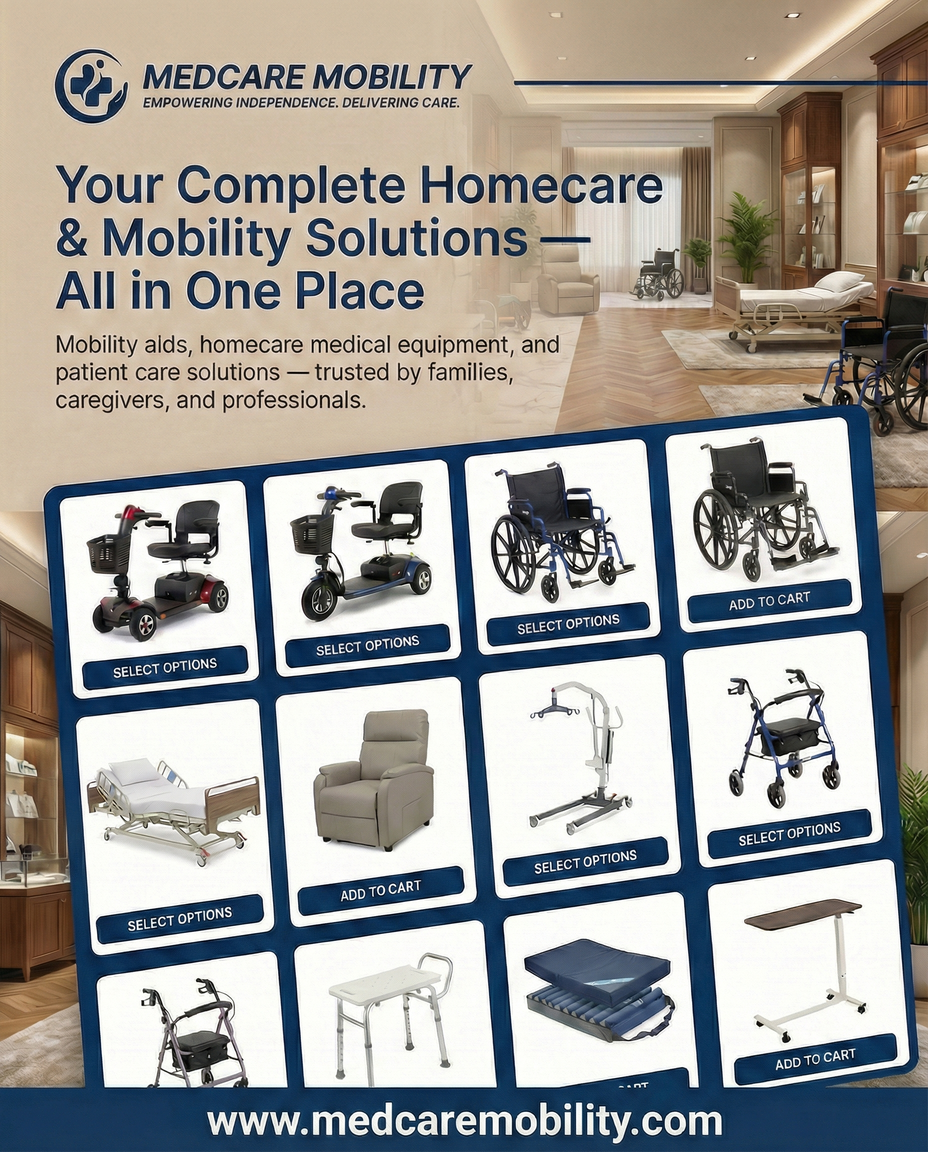
The right medical equipment can dramatically improve safety, independence, and daily comfort. But families often aren’t sure whether they need a walker, a wheelchair, or something more specialized — like a patient lift or hospital bed.
This guide explains each major category based on mobility level, strength, and caregiving needs — so you can make the best choice with confidence.
🚶♀️ Walkers & Rollators
Best for seniors who can walk but need support with balance, endurance, or uneven flooring.
Best For:
- Fall prevention & safer home mobility
- Seniors who get tired walking across rooms
- Reducing cane dependence
♿ Transport & Manual Wheelchairs
Best when walking becomes painful, unsafe, or impossible for longer distances.
Best For:
- Limited strength or major balance issues
- Trips out of the house (appointments, shopping)
- Caregivers needing easier pushing chairs
🦾 Patient Transfer Lifts (Hoyer Lifts & Lift Chairs)
When lifting becomes unsafe for caregivers or painful for seniors, mechanical lifts protect both parties.
Best For:
- Non-ambulatory seniors
- Bed-to-chair or toilet transfers
- Preventing caregiver back injuries
Explore Transfer Chairs (placeholder)
🛏️ Home Care Hospital Beds
Adjustable positioning improves comfort, breathing, sleep quality, and caregiver access during transfers.
Best For:
- Seniors who spend significant time in bed
- Pressure ulcer prevention
- Caregiver-assisted repositioning
🛡️ Pressure Relief Mattresses
Designed to prevent painful pressure sores for seniors with limited mobility or long-term bed-use.
Best For:
- Stage 1–4 pressure injury risk
- Seniors recovering from surgery
- Long-term in-bed positioning support
🛁 Bath Transfer Benches & Shower Chairs
Most bathroom injuries happen stepping into or out of a bathtub. Transfer benches give seniors a safe way to sit and move across the tub edge.
Best For:
- Balance issues during bathing
- Weak lower body strength
- Seniors with dizziness or fatigue
Room-by-Room Home Safety Checklist for Seniors Living at Home
Every room in a home should support safety and ease of movement. This checklist highlights the highest-impact changes to reduce fall risks and improve independence — especially for seniors with mobility limitations.
For families needing deeper care support guidance, see our full resource: Comprehensive Guide to Family Caregiving at Home
🚿 Bathroom
- Non-slip mats inside & outside tub/shower
- Shower chair for stability during bathing
- Handheld shower head for seated washing
- Night lighting for safe nighttime bathroom trips
- Transfer bench for safer tub entry/exit
🛏️ Bedroom
- Bed height allows safe feet-flat standing
- Clear path from bed to bathroom
- Nearby lamp or motion-sensor lighting
- Firm mattress and pillows for positioning help
- Phone or alert device within reach
🍽️ Kitchen
- Frequently used items stored at waist height
- Sturdy step stools avoided — high fall risk
- Anti-fatigue mats for long standing tasks
- Easy-grip utensils & openers
- Working smoke & carbon-monoxide alarms
🚶 Hallways & Common Areas
- Remove loose rugs or secure with non-slip backing
- Clutter-free walking paths
- Nightlights along main walking route
- Stable furniture for hand-support
- Strong lighting switches accessible at entry
🚪 Entrances & Doorways
- Secure railings at any outdoor steps
- Low-threshold entrances if possible
- Chairs positioned for safe shoe wearing
- Easy lock operation for arthritis limitations
- Doorbell camera or peephole for safety
🌳 Outdoor Areas & Yards
- Walkways kept clear of debris, ice & uneven areas
- Good lighting for evening entry
- Handrails where steps cannot be avoided
- Slip-resistant shoes for walking outside
- Seating areas for rest breaks
Even small changes can prevent major injuries. Many improvements are affordable and can be set up within a single afternoon — with a huge impact on long-term independence.
Coming Soon: Download the full printable PDF checklist — perfect to take room-to-room while updating home safety.
Download Checklist (PDF)Assisted Living vs Aging at Home — Which is the Best Fit?
Most older adults want to remain living independently at home — surrounded by familiarity, dignity, and comfort. That’s the goal of aging in place. However, there are times when assisted living may offer better safety, medical support, or social engagement.
🏡 Aging at Home — Pros
- Comfort of familiar surroundings
- Preserves independence and dignity
- Often lower long-term cost compared to facilities
- Flexible care — customized to senior’s needs
- Easier to maintain social connections with family
🏡 Aging at Home — Challenges
- Home may require safety modifications
- Caregiver burnout risk if help is limited
- Medical emergencies require quick response planning
🏥 Assisted Living — Pros
- Round-the-clock assistance available
- Meals, medications & cleaning handled
- Structured social activities reduce isolation
- Better fit if senior needs daily professional care
🏥 Assisted Living — Challenges
- High cost depending on level of care
- Loss of independence & privacy can impact well-being
- Difficult emotional transitions
- Distance from family affects visitation
| Care Option | Average Cost Range | What Impacts Cost |
|---|---|---|
| Aging at Home | $0 – $5,000+ / month (depends on care) | Care hours needed, equipment, home safety upgrades |
| Assisted Living Facility | $4,500 – $7,500+ / month | Location, medical care level, private room |
| Memory Care Facility | $5,000 – $10,000+ / month | Specialized cognitive & safety support |
The key factor is safety. If a senior can remain safe at home with support — such as mobility aids, home care assistance, and smart safety modifications — then aging in place is often the healthiest and happiest choice.
Signs It Might Be Time to Consider Assisted Living:
- Frequent falls or serious medical emergencies
- Increasing confusion, memory loss, or wandering
- Daily tasks (bathing, toileting, eating) become unsafe
- Caregiver exhaustion becomes a risk to both parties
Assisted living should never feel like failure — it’s a decision made out of love, dignity, and safety.
With the right plan and home support strategies, many seniors can delay or avoid assisted living placement and continue enjoying life at home — safely and confidently.
Your Personalized Aging-in-Place Care Plan
Aging at home can be safe, joyful, and empowering — but only when a plan is in place that supports medical care, mobility, home safety, and caregiver well-being. Use this checklist to build a custom plan that fits your loved one’s unique needs. This helps avoid emergencies, prevents caregiver stress, and ensures your home remains a safe and independent living environment.
📌 Trusted Assistance If You Need Help Today
- Area Agencies on Aging (AAA): Local support for home care + grants
Eldercare Locator → eldercare.acl.gov - AARP HomeFit & Safety Planning: Expert guides on safe home redesign
aarp.org/homefit - National Council on Aging (NCOA): Benefits & financial aid for seniors
benefitscheckup.org - Alzheimer’s Association 24/7 Helpline: Memory care support
📞 800-272-3900 - Medicare Support: Home care benefit information
medicare.gov
These organizations support families facing
📝 Create Your Care Plan
Use this list to organize everything needed for safe aging-in-place:
Medical Care Needs:
- Primary doctor & specialty care contacts
- Medication management plan (who administers & tracks?)
- Emergency response plan (falls / home alone)
Mobility & Daily Living Support:
- Which mobility device:
? - Is a transfer lift or lift chair needed for safe moving?
- Support with bathing, toileting, meals, grooming
Home Safety Improvements:
- Fall prevention upgrades (lighting, flooring, grab support)
- Bedroom + bathroom accessibility
- Emergency alerts or monitoring technologies
Caregiving Structure:
- What tasks family handles
- What tasks paid caregiver handles
- Backup plan if primary caregiver is unavailable
Financial & Coverage Strategy:
- What Medicare / supplemental insurance covers
- What requires private pay
- Budget for home modifications and caregiving support
Tip: Print this list and bring it to doctor visits, home evaluations, and family care meetings.
You’re Not Alone — And There Is a Plan for Independence
The goal of aging in place is simple: keep seniors living safely at home, preserving independence, dignity, and joy for as long as possible. With the right planning — tailored mobility support, fall prevention, reliable caregiving, and smart home safety upgrades — your loved one can continue living where they feel most at home.
Every small improvement makes life easier, happier, and safer — starting today.
📌 Bookmark this guide and revisit it often — your plan will evolve as care needs change. And when you’re ready, we’ll be here with new insights and resources dedicated to safe, independent senior living.